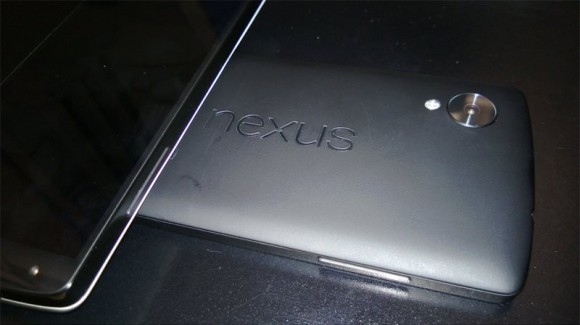
Nexus 5 makes an appearance in yet another live photo


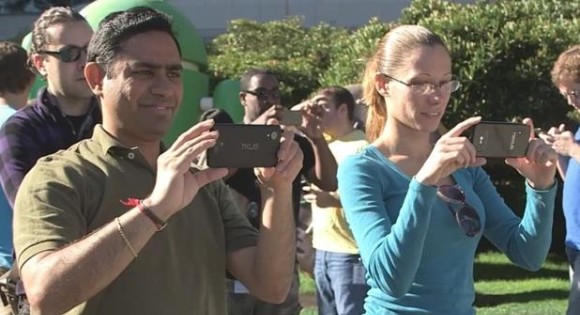
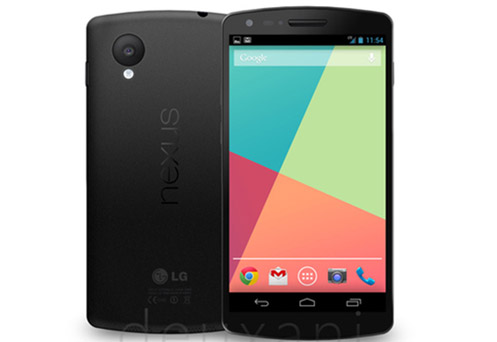
After appearing in an Android KitKat promo video, going through the FCC, and sitting unattended in a bar, the yet to be announced Nexus 5 smartphone made another unscheduled appearance. This time around, a live photo of the LG made Android powerhouse popped up in a forum thread at Macrumors.


The latest live photo of the Nexus 5 falls right in line with previous leaks. It clearly shows the handset’s relationship with the 2013 Nexus 7, thus further reaffirming that Google is on its way to unify the design of its own family of devices. The user who uploaded the photo has subsequently taken it down, so there’s no reason to doubt its authenticity.


The person who posted the image also left a couple of quick hands-on impressions. The Nexus 5 is said to be smaller than an LG G2 and (unsurprisingly) feeling a lot like the latest Nexus 7.


Earlier today, we also ran into most of the Nexus 5’s specs from a leaked log. Now that there is little left to the imagination, all we’re left with is to wait for the official announcement. The latter is expected to take place in October.


Via


Google's Nexus 5 will allegedly feature nano-SIM card slot


Hot on the heels of the leaked specs from earlier today, another detail on the highly anticipated Nexus 5 made an appearance. The next generation, LG-made Nexus will reportedly feature a nano-SIM card slot.


The information on the smartphone appeared on the website of the Ukrainian wireless provider Life:) (yes, the smiley is part of its name). In a small-font disclaimer, the carrier states that it will equip its iPhone 5s, 5c, and Nexus 5 users with a nano-SIM card.


The Nexus 5 is expected to be unveiled before the end of October. As always, we’ll keep you posted on all details surrounding the smartphone.


Source (in Ukrainian) | Via


Kantar: Windows Phone exceeds 9% market share in Europe


According to the latest smartphones sales data from analyst company Kantar Worldpanel, Windows Phone has reached a new high in market share across the five major European markets (UK, Germany, France, Italy and Spain).


In France, Microsoft's mobile OS has scored 12% market share, while in the UK it's powering 10.8% of the smartphones sold in the three months ending in August. This is the first time ever Windows Phone has scored double digits in such major markets.


The company explains the success of the OS with Nokia's expansion into the low- and mid-range markets. Phones like the Lumia 520 and Lumia 620 are some of the most popular smartphones running Windows Phone, as they are "hitting the sweet spot" appealing to users between 16 to 24 years as well as the 35-49 year-olds.


However, it's not all good news for Microsoft, as in Italy, its OS is marking a slight decline - from 10.3% to 9.5% year-over-year. In China, the fall is pretty dramatic - 2.6 percentage points on an yearly basis - from 4.7% to 2.1%.


In Australia and the United States, WP is still on the rise. The platform holds a 6.5% market share in Australia, marking a growth of 2.8 percentage points YoY, while in the US the growth isn't as fast-paced at 0.4 percentage points rounding up to a market share of 3%.


Overall, Android is still the most popular mobile operating system on the market with a market share in Europe of 70.1%. Apple's iOS is a very distant second at 16.1%, while Windows Phone is third with 9.2% of the market. BlackBerry is fourth at 2.4%, losing more than half of its share since 2012.


Source | Via


Bluetooth 4.0 not coming to high-end Lumias, says Nokia Australia


Nokia Australia announced in a series of tweets that Bluetooth 4.0 Low Energy support is not coming to the Lumia 820, 920 and 1020 smartphones with the upcoming GDR3 Bittersweet shimmer update.


Nokia Australia later clarified the reason behind the lack of Bluetooth 4.0 LE support within the next major WP8 release is hardware limitations.


That sounds a bit strange, given that the recently released Nokia Amber update adds Bluetooth 4.0 LE to the Lumia 520, 620, and 720, while Lumia 625 has it out of the box.


Bluetooth 4.0 LE is rather useful for many accessories, such as temperature sensors, heart-rate and fitness monitors, plus the rumored Nokia Treasure Tag accessory.


Even though the information comes from Nokia Australia, we are still hoping this is some kind of misunderstanding and waiting for an official statement from Nokia's HQ.


Source | Via


Fujitsu Arrows A hits Softbank, lasts a day after a 10min charge


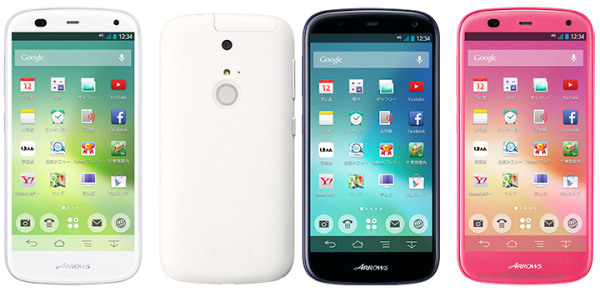
The Japanese carrier Softbank has unveiled its upcoming smartphone lineup and the most interesting one among them is the Fujitsu Arrows A running on Android 4.2 Jelly Bean.


The smartphone is powered by Qualcomm's latest Snapdragon 800 chipset and comes with a 5" 1080p display and a 13MP camera. It has 64GB of internal storage, which is further expandable via a microSD slot.


What's interesting about this Japanese fella is Fujitsu promises three days of battery life on a single charge, and a whole day of battery endurance after only 10 minutes of charging.


Finally, the Arrows A comes with a fingerprint reader on its back and probably supports finger unlock feature.


Fujitsu Arrows A will hit the Softbank network in December.


Source | Via


Lenovo Vibe Z with 1080p display, Snapdragon 800 goes official


After announcing the Lenovo Vibe X at IFA 2013, the company has added a second member to the Vibe family dubbed Vibe Z.


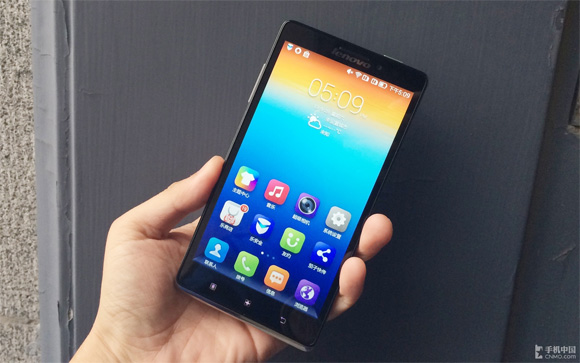
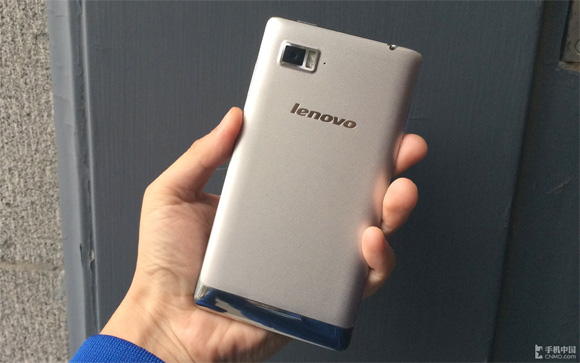
The Lenovo Vibe Z was previously known as K910 and sports a metal body and a design similar to the Vibe X, which the company hopes to appeal to the younger demographic outside China.


The Lenovo Vibe Z sports a 5.5" display of 1080p resolution. The phone is powered by the a 2.2GHz Qualcomm Snapdragon 800 chipset, 2GB of RAM and Adreno 330 GPU. As you'd imagine, this configuration runs Android 4.2.2 Jelly Bean without problems.


At the back, there's a 13MP camera with LED flash, which is similar to the one found on the Lenovo Vibe X. At the front, there's a 5MP snapper. The phone measures just 6.9mm thick, but battery size hasn't been detailed yet.


Lenovo has announced its plans to update the device to Android 4.4 KitKat in the future. Specific plans aren't yet revealed, as isn't the pricing and availability of the Vibe Z.


Source | Via


HTC One Max to launch October 15, report claims


The HTC One Max could appear next month.

The HTC One Max could appear next month.


(Credit: ePrice)

HTC may unveil its supersized HTC One Max within just a few weeks.


Reportedly outfitted with a 5.9-inch screen, the HTC One Max will be unveiled on October 15 -- at least, that's the information from Chinese social network Weibo, as spotted by blog site Phone Arena.


Just this week, photos of the One Max popped up on the Web site of China's TENAA, which is responsible for certifying such devices. Those photos suggest that the phone has received regulatory approval in China, according to Phone Arena.


Based on the photos and other recent reports, the HTC One Max will offer a 5.9-inch 1,080p HD display, a quad-core 2.3GHz processor, 16GB of internal storage, 2GB of RAM, and an UltraPixel camera. The phone will also reportedly include its own fingerprint scanner, likely similar to the one Apple introduced with the iPhone 5S.


Known leaker @evleaks recently said that Sprint will carry the phone when it makes its US debut.


Android Jelly Bean-flavored Boost Warp 4G drops for $200 off-contract


Boost Mobile's latest Android, the 4.5-inch Boost Warp 4G.


(Credit: Boost Mobile)

Boost Mobile added a new no-contract Android phone to its lineup on Thursday, the Android-powered Boost Warp 4G. Priced at $199, it's a refreshed take on last year's midranger, the Boost Warp, this time adding a faster LTE data connection backed by Sprint's network.


Manufactured by ZTE, the Warp 4G runs Android 4.1 Jelly Bean and features a 4.5-inch HD display and an 8-megapixel rear camera. Looking under the hood, we learn the smartphone includes a 1.2GHz dual-core processor, 8GB internal storage, and 1GB RAM.


In terms of software, the Warp 4G comes with the full suite of Google apps as well as Boost's own Mobile ID pack. The latter bundles apps, ringtones, wallpapers, and widgets that are centered around common themes and interests, like sports or shopping, for instance.


You can buy the Boost Warp 4G online or from Boost stores starting today.


Gmail for Android freshens up a bit


Gmail for Android's conversation view separates the email you're currently reading in a thread.


(Credit: Google)

Gmail's Android app gets some small changes that make it easier to use, in a new version that started slowly rolling out on Wednesday.


The conversation view has been streamlined so that the e-mail you're reading has been separated slightly from those that preceded it in a thread. It's a look that owes much to Google's "card" style.


Multiple message selection has been adjusted as well, replacing the chosen messages' avatars with checkmarks to make it more apparent which messages have been selected to be moved, archived, or deleted.


Gmail also now tells you via an in-app notification box when e-mail Sync has been disabled.


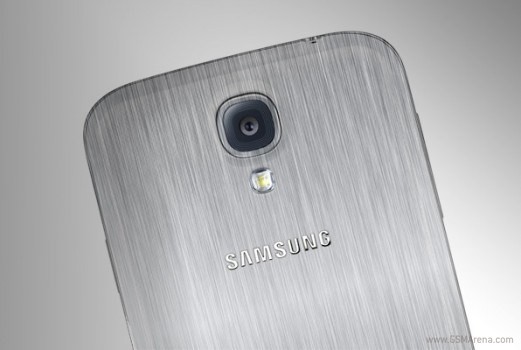
Metal Galaxy F could be Samsung's new flagship device?


Samsung may introduce a new line of Galaxy smartphones in the coming months.


(Credit: Samsung)

Samsung could soon introduce a third premium smartphone experience to complement the Galaxy S and Galaxy Note family, says an industry source (translate).


According to ETNews, the so-called Galaxy F could feature cutting-edge hardware specifications and materials that trump those in its current portfolio. Key among the rumored details are an octa-core processor, a 16-megapixel camera with optical image stabilization, and a metal case. This design could see Samsung pushing further into the curved display technology.


Although rumors point to the Galaxy F as an Android 4.2 Jelly Bean device, I suspect that by the time it arrives (if it arrives), it will at least carry Android 4.3 Jelly Bean, and hopefully Android 4.4 KitKat.


I don't know about you, but the idea of a premium metal Samsung smartphone sounds very expensive. With the plastic Galaxy S4 fetching over $600 retail and the Galaxy Note 3 coming in at around $700, depending on the region, the Galaxy F could cost $800 or more without a contract.


This is, however, assuming that Samsung doesn't lower the pricing structure of the previous lineup to reflect this potential new player.


With nearly all other handset makers now producing aluminum or metal bodies with nonremovable batteries, it should not come a surprise that Samsung might take a crack at the same. One of the first things people notice about the HTC One and the Sony Xperia Z is the way they feel in hand. A new Galaxy F series could put an end to the complaints of Samsung's plastic ways without changing the Galaxy S series.


If the F comes to be, it will be interesting to see just how many of these phones sell and what sort of market availability Samsung envisions. It's one thing to release a special gold version of an existing device; it's something entirely different to introduce a brand-new line.


Samsung readying flexible Galaxy Note 3 Active -- report


Will the Samsung Galaxy Note 3 be the first device to see a flexible display?


(Credit: James Martin/CNET)

The Samsung Galaxy Note 3 could soon have a bendable cousin, according to the Asian Daily (translated).


Indeed, Samsung has long been rumored to introduce a smartphone with a flexible display, so the chatter isn't entirely off-base. And now that the Galaxy Note 3 is beginning to make it to carriers, it could provide Samsung with the opportunity to make such a phone a reality.


According to the report, as early as next month Samsung will produce a limited edition of the Galaxy Note 3 that features a bendable plastic display. The report also says that the screen on the Galaxy Note 3 Active, as the device may be called, will be waterproof, but not completely unbreakable.


As we learned during the run-up to the Galaxy Note 3's debut, Samsung may be testing multiple display sizes and hardware configurations for the Note 3. Features, however, are likely to be inconsistent between the two devices, just as they were between the Galaxy S4 family.


Fortunately for us we won't have to wait long to find out if there's fire behind this smoke.


(Via Android Community)


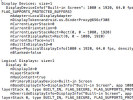
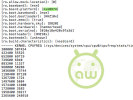
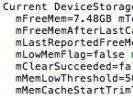
Leaked Nexus 5 log reveals most of the specs


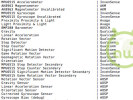
Myce.com got their hands on a log from the Nexus 5 (also called LG D820 and Hammerhead) and AndroidWorld.it dug though it. Some 133 thousand lines were searched but the reward was probably worth it - a number of interning specs for the upcoming pure-Google phone were confirmed.


Most of the stuff is no surprise – a 5" screen (actually, 4.97") with 1080p resolution, 442ppi pixel density, a Snapdragon 800 chipset with 2GB of RAM and 16GB storage (on that concrete model, there might be others with more and hopefully not less storage). The phone ran Key Lime Pie (a.k.a. Android 4.4 KitKat), build version KRS74H.


It seems that the camera has been changed to an 8MP snapper (the Nexus 4 also got a lower-res camera than the Optimus G it was based on). It's too early to tell if there will be optical image stabilization (probably not though). There's a 1.2MP front-facing camera too.


The Nexus 5 will pack dual-band Wi-Fi a/b/g/n/ac, Bluetooth 4.0, NFC and GPS connectivity. The model whose log file leaked ran on North American LTE bands, but we should expect a Euro version too.


Pieces of the leaked log with the salient info


The phone will have wireless charging built in and while battery capacity wasn’t in the logs, FCC docs point to a 2,300mAh unit. There will also be a full set of sensors – accelerometer, magnetometer, gyroscope, proximity and light sensors as well as a barometer. The FCC measured the phone at 131.9mm tall and 68.2 mm wide, there's no info on thickness.


A case maker, SPIGEN, puts the Nexus 5 launch date at October 31, a month from now.


Thanks for the tip, Emanuele!


Source (in Italian)


LG G Pro Lite Dual to have stylus, lower-end screen and chipset


The LG G Pro Lite Dual is back with a brand new leak and while last time we wondered why it was called "Lite," now we wonder why it's called "Pro." There's also a curious change – the phablet will have a stylus that can be sheathed into the device's body, Galaxy Note style (unlike the LG Vu's, which had no slot for the stylus).


The dual-SIM LG G Pro Lite Dual will reportedly have a 5.5" IPS screen like its single-SIM sibling, but that screen will only have qHD resolution (540 x 960 pixels) with half the pixel density. But it's the chipset that got the greatest cutback – instead of a Snapdragon 600, the G Pro Lite Dual will have only a dual-core 1GHz processor, according to the new leak. It will have 1GB of RAM (down from 2GB) and 8GB built-in storage (down from 16GB/32GB) with a microSD card slot.


LG G Pro Lite Dual will have a stylus


The phablet will run Android 4.1.2 with LG's customizations (KnockOn, Guest mode, etc.) and will pack an 8MP camera with a BSI sensor. There will also be an FM radio and a 3,140mAh battery (same as the Optimus G Pro). The dimensions will be almost identical, 150.2 x 76.9 x 9.5mm (there's no info on weight).


The phone will launch in Russia mid-October at RUR13,000 (around $400 and half the price of the Optimus G Pro in Russia), where it will compete against the likes of Samsung Galaxy Grand Duos, Galaxy Mega 5.8 and Sony Xperia C.


Thanks again to Freddie!


Source (in Russian)


Samsung will reportedly make 30-40% of Apple's upcoming A8 chip


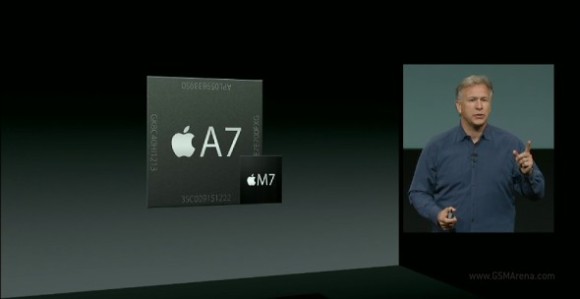
While the freshly announced, 64-bit CPU toting iPhone 5s is enjoying its time under the spotlight, a report has emerged, potentially shedding light on the production of Apple’s next generation mobile SoC. According to Korean media, Samsung will handle the manufacturing of around 30 and 40% of the upcoming Apple A8 chip which will find a spot in future iOS devices.


Taiwan Semiconductor Manufacturing Co. (TSMC) is said to handle the rest of the chips’ production. Apple reportedly wanted TSMC to handle the entire A8 chip manufacturing process. However, the challenges associated with the production of state of the art 20nm chips necessitated the involvement of Samsung in the process.


There has been no official confirmation from any of the parties involved in the deal. The rumor however, falls in line with previous reports about Apple’s intent to diversify its chain of suppliers.


Source (in Korean) | Via


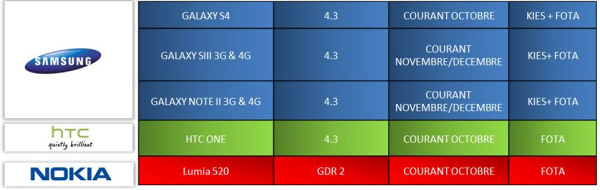
SFR reveals Android 4.3 schedule for Galaxy S4, S III and Note II


The French carrier SFR has released a roadmap listing the upcoming Android 4.3 updates for the Samsung Galaxy S4, Galaxy S III and Galaxy Note II, as well as the HTC One.


Samsung's Galaxy S4 will receive the latest 4.3 Jelly Bean treatment in October, while last year's flagship - the Galaxy S III and Galaxy Note II will get their fix in November or December.


HTC One is also in this table, revealing that the SFR-locked units will start getting the update in October, just a month after unlocked units got their Android 4.3.


Finally, Nokia Lumia 520 is also mentioned in the roadmap. Its Amber update will come in October, though it won't bring the Glance Screen feature. If it is of any consolation, the Glance Screen is also missing on Lumia 625 - it seems this extra has been reserved for more premium Lumia phones.


Source | Via


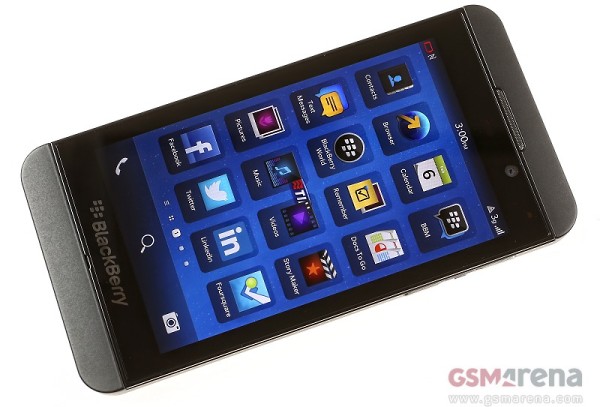
BlackBerry reports loss of $965 million in fiscal Q2


It's no secret that BlackBerry isn't doing too well, but no one knew just how bad until the company's just-released fiscal Q2 report. It highlights a whopping $935 million loss on the BlackBerry Z10.


The "Z10 inventory charge," a clever way to say that the device simply isn't selling, is enough to almost wipe out the listed $1.6 billion revenue. When combined with the corporate restructuring losses, the company posted an overall loss of some $965 million.


The Canadian-based company has struggled to post a profit since it dropped the RIM name and released its anticipated BB10 OS update. Its latest flagship, the BlackBerry Z10, has failed to make a significant impact, and the company continues to lose market share to more competitive Android, WP and iOS devices.


This news comes hot on the heels of the $4.7 billion buyout offer from one of their minor shareholder groups, Fairfax Financial Holdings, who own a 10% stake in the company.


Source | Via


Cheaper Moto X version might have exchangeable color covers


The Moto X is built in Fort Worth in Texas and ships to the US – and so far only to the US. There's talk, however, of a cheaper version, which the rumor mill has dubbed Moto DVX. It's this version that might be available outside the US, probably without the customization options.


Not all of them anyway, a photo allegedly shows four back panels for the Moto DVX in four different colors – Turquoise, Raspberry, Chalk and Black from the options on the Moto Maker site. The Moto Maker has another 24 color options, so there's a chance there are DVX covers other than the ones in the photo.


So, Moto DVX buyers might not be able to choose the color of the ring around the camera, but there will be a wide selection of color options. Also (fingers crossed), the removable back cover might mean user-replaceable battery (and microSD card slot, although we believe the Moto X lacks a storage expansion slot on purpose, it's what the Google overlords want).


The Moto DVX will cost $300 unsubsidized (or even as low as $200) according to recent rumors and will launch sometime next month.


Source


Samsung SIM-locking its droids made after July to home regions


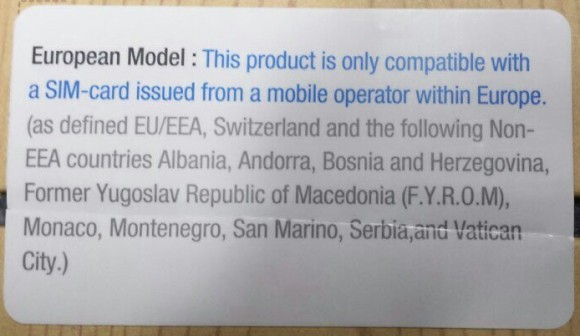
Samsung has started locking its Android smartphones, built after the end of July 2013, to their respective home continents. So far the new practice has been confirmed for Europe and America (read South, North and Central, including the Caribbean).


Each device will come with a sticker in the retail package, indicating the region it can be used in.


The information became public primarily through UK retailer Clove which reported that the Samsung Galaxy Note 3 units it received came with a warning that they are locked regionally.


Samsung Germany issued an official statement, which shines some light on the new policy. Only devices produced after the end of July 2013 are SIM locked to their region and it refers to the Samsung Galaxy S III, S II, S4, S4 mini, Note and Note 3. The lock lets you freely travel across the whole continent - a device purchased in Europe will work in all European countries, for example. However, according to the warning stickers you can't use those with a SIM card issued from an Asian, African, Australian or American carrier.


If a device is purchased in one region but hasn't being activated before being exported, you will be able to get it unlocked through a Samsung service partner.


The SIM lock uses an MCC (Mobile Country Code) lock method and is done through the CSC's (Customer Software Customization) whitelist of countries. Removing the lock yourself will most probably be enabled later on but will almost certainly end up voiding your precious warranty.


Despite official information on the new policy Samsung does not address the reason behind it. Why is it doing it? It might be an attempt to try and prevent retailers importing devices from different continents, but it's the customers who travel a lot that will end up suffering because of it. Not quite ideal, if you ask us.


Source 1 (in German) | Source 2 | Source 3 | Via


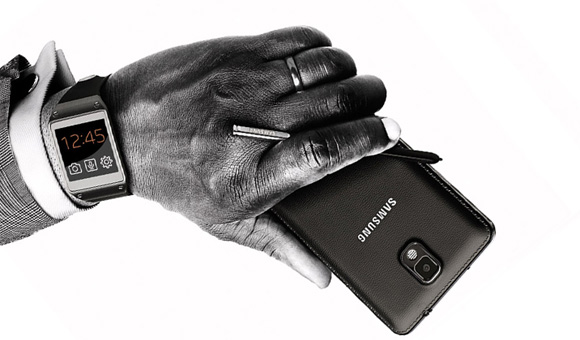
Samsung Galaxy S4 to support the Gear smartwatch by October


Samsung's executive vice president for marketing at the company's mobile division Lee Young-hee has revealed that the Galaxy S4 will get support for the Galaxy Gear smartwatch by the end of October.


Additionally, the Galaxy Note II and Galaxy S III smartphone are also going to support the company's smartwatch. This will happen by the end of December, according to Lee Young-hee.


The compatibility between the products will come as part of the Android 4.3 Jelly Bean update that the trio of smartphones is bound to get. The update brings the crucial Bluetooth 4.0 LE support that the Galaxy Gear requires.


The Samsung Galaxy Gear smartwatch will start selling in South Korea in October. The unsubsidized price of the Galaxy Gear is €350.


Source | Via


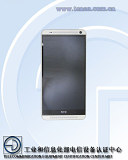
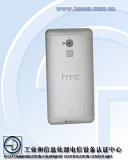
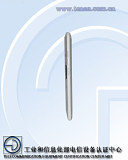
HTC One Max photos leak, courtesy of China regulatory


The HTC One Max leaks once again, this time from an official source. China's Tenaa, the country's equivalent of the FCC brings four new photos and an update on the dual-SIM situation.


An earlier leak showed what's under the back cover of the One Max and there wasn’t an obvious second SIM slot. However, the Tenaa page describes the phone (as far as the machine translation tells us) as: "the equipment for the dual card dual standby mobile phone dual-pass."


HTC One Max photos from Tenaa


The HTC One Max model is listed as 809d and supports GSM/GPRS and CDMA 1x/CDMA2000 (Rev. A). Earlier rumors and leaks put the screen size at 5.9" (1080p resolution) and the chipset as Snapdragon 600 or possibly a Snapdragon S4 Pro. The chipset naming scheme is confusing here, but both use Adreno 320 GPU, the difference is in the CPU core revision and clockspeed.


The camera is an UltraPixel unit though we haven't seen anything about Optical Image Stabilization (OIS) so far. The thing below the camera is a fingerprint scanner (they are coming back in fashion).


The HTC One Max is (according to rumors) scheduled for an October launch at a $800 price point.


Source (in Chinese) | Via (in Dutch)


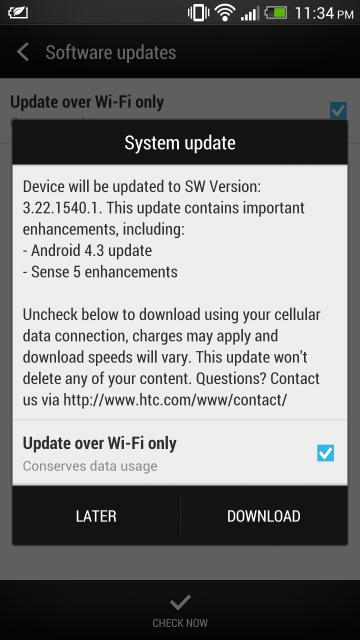
Android 4.3 update for HTC One now rolling out internationally


If there's one thing you can give credit to HTC for, it's being quick with the Android update on the HTC One. After years of lagging behind Google with respect to the latest updates, the company has been consistently quick in delivering updates for their newest flagship device.


Earlier this week the company promised that they will soon start rolling out the Android 4.3 update for the HTC One. And as promised, users are now seeing the update notification pop up on their device. Several users on xda-developers forums are reporting getting the update on their phone.


If you have an HTC One, check if the Android 4.3 update is available for download, if you haven't got the notification already.


Thanks Dijon Vula for sending this in.


Source


Nokia tipped to unveil a total of six new devices on October 22


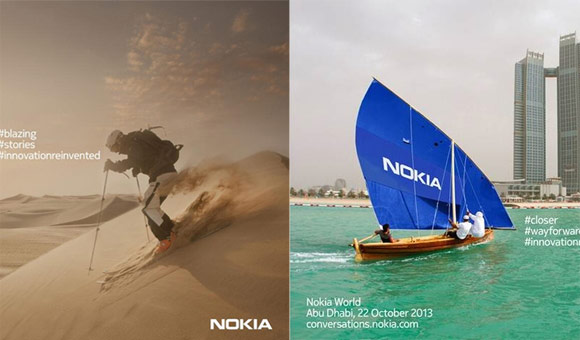
Nokia is holding an event dubbed Innovation Reinvented in Abu Dhabi on October 22 and according to sources close to the company's plans, the Finns are preparing to unveil a total of six devices.


At least two of them are going to be "new Lumias." Most probably, one of them is going to be the Nokia Lumia 1520 6-inch phablet that has been leaking recently. The other Lumia is allegedly the Nokia tablet, which is also going to be part of the Lumia family of products.


Additionally, there are going to be a set of accessories that'll also debut in Abu Dhabi. One of them, according to the TheVerge source is going to be "pretty special." No further details have been given, but we guess the rest of the devices will be budget mobile phones from the Asha series.


Nokia has been gradually revealing more information regarding its upcoming October 22 event. The start time of the event is yet to be confirmed.


Samsung to bring its first curved display smartphone in October


It appears that after all these years of development, curved displays are finally ready for prime time. According to some Samsung executives, the company has plans to introduce a curved display smartphone in October.


However, the officials declined to provide any further details on the exact release date, pricing and the operating system powering the smartphone. Could the Tizen debut coincide with the curved screen smartphone pioneer?


Samsung's recent patent application for a smartphone with a curved vertical axis more or less confirm the company's planс to introduce a curved display smartphone. We'll be on the lookout for more info about it and keep you updated.


Source


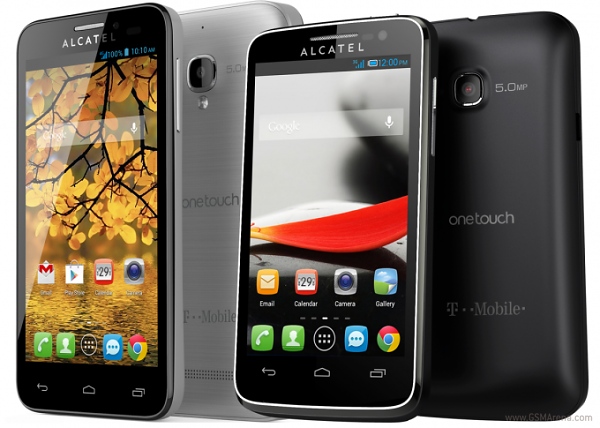
Alcatel One Touch Fierce and Evolve coming to T-Mobile


Alcatel has officially announced that its two new affordable smartphones - One Touch Fierce and Evolve will be launching on T-Mobile.


The One Touch Fierce and Evolve will be available across T-Mobile's retail stores from October 5. Alcatel Evolve will retail for $27.99 with 24 monthly device payment of $31. On the other hand, the One Touch Fierce will cost you $19.99 down with $6 monthly payment for next 24 months.


If you are wondering what these affordable smartphones has got to offer, here's a quick rundown. The One Touch Evolve comes with a 4-inch display with a resolution of 800 x 480 pixels. The Android 4.1 Jelly Bean powered smartphone features a MediaTek processor clocked at 1 GHz, 512 MB RAM and 4 GB of internal storage with the ability to expand memory via microSD Card slot.


Strangely, the much cheaper offering from Alcatel, the One Touch Fierce sports a 4.5-inch display with a resolution of 960 x 540 pixels. The smartphone is powered by a 1.2 GHz quad-core MediaTek processor along with 1 GB of RAM. Fierce runs on Android 4.2 Jelly Bean and has 4 GB internal memory.


You can head on to T-Mobile website to know more about the plan details and other terms of the contract.


Via


Over 30 million Samsung Galaxy Note II units sold


The Samsung Galaxy Note phablets are some of the best-selling smart devices around – the original Note has around 10 million sales to date, while the outgoing Note II has reached 30 million.


There numbers come from general manager of Samsung Taiwan's mobile communication team Andy Tu. This sounds about right as JK Shin himself (Samsung Mobile's chief) said that the Galaxy Note line has sold over 38 million a couple of weeks ago.


The Galaxy Note II has come a long way since it sold 3 million units a month after launch and reached 5 million units sold another month later. The pace is accelerating, however, as the original Note took until March 2012 to hit the 2 million mark and it launched in October 2011.


This doesn’t necessarily mean that the new Galaxy Note 3 will see a similar jump in sales but we're waiting for the quarterly report from Samsung to see if the phablet will be mentioned alongside the Galaxy S4 as one of the hottest sellers (the S4 passed 20 million as early as July). Korean site ET News claims the Note 3 isn't doing too hot in its home market, in part due to a government crackdown on subsidies.


Source 1Source 2 | Via


Samsung to introduce new super-premium Galaxy F line


Word out of Korean news site ETNews is that Samsung is allegedly developing a new ultra-premium Galaxy F series to go alongside its well-known Galaxy S line. The first device in this series is slated to get introduced early next year.


If the source is to be believed, the first F series device (most likely called the Galaxy F), will feature a full-metal body and updated design. It's set to come with an Octa-core Exynos processor, 16MP camera with OIS. No word on the screen size or resolution, but it will likely be priced higher than the Note series.


The introduction of a new premium lineup makes sense, as the S series and Note series usually produce two flagships a year, and the smartphone is usually released in the first half.


This means that by the time the H2 rolls around, competitors like LG and Sony have outed their own superior offerings, resulting in a less-than-stellar holiday sales season. Releasing a high-range metal-clad smartphone during this period would be a smart move.


Source | Via


Samsung Galaxy Note 3 and Galaxy Gear now available


Samsung's big IFA 2013 announcements – the Galaxy Note 3 phablet and the Galaxy Gear smartwatch – are already on sale and some early-bird customers in the Netherlands already have them in (or on) their hands.


In the Netherlands, an unlocked Samsung Galaxy Note 3 (the N9005 with Snapdragon 800, LTE and 2160p UHD video capture) will set you back €600 unlocked for either the Black and White version.


If you want it on contract, you can have it on Tele2 for €150 upfront and €38 a month or T-Mobile for €163 and €43 a month. Vodafone has it at €205 and €44 a month. You can also have it on Telfort for free at €52 a month or Hollands Niuewe for €316 and €50 a month. These are all for 2-year contracts.


The Samsung Galaxy Gear is €350.


In the UK, Expansys lists the white Note 3 as available at £620, the black one isn't there yet. EE has set the price of the white one at £30 up front and £31 a month. Clove will be getting its Galaxy Note 3 units tomorrow at £594 SIM-free (both black and white).


Clove also has the Galaxy Gear on pre-order (expecting stock "at the end of September", which is about now) and is yet to confirm which colors will be available. The price is £282.


Germans will be getting their Galaxy Note 3s in about a week from Amazon – the white one is €700, but the black one is listed at €760. Other stores have the black one at the proper €700 price.


The Galaxy Gear is priced at €300 at Amazon.de.


The French will have to pay €712 for their Galaxy Note 3s and €300 for the Galaxy Gear.


Negri Electronics ships internationally and has the Note 3 unlocked as well as the carrier-specific versions. The site also lists the N9000 – that's the Exynos 5 Octa version – which starts at $770. The Galaxy Gear is $389.


You can check out our preview of the Note 3 and the Galaxy Gear hands-on for more info.


Photo via


Samsung readying flexible Galaxy Note 3 Active -- report


Will the Samsung Galaxy Note 3 be the first device to see a flexible display?


(Credit: James Martin/CNET)

The Samsung Galaxy Note 3 could soon have a bendable cousin, according to the Asian Daily (translated).


Indeed, Samsung has long been rumored to introduce a smartphone with a flexible display, so the chatter isn't entirely off-base. And now that the Galaxy Note 3 is beginning to make it to carriers, it could provide Samsung with the opportunity to make such a phone a reality.


According to the report, as early as next month Samsung will produce a limited edition of the Galaxy Note 3 that features a bendable plastic display. The report also says that the screen on the Galaxy Note 3 Active, as the device may be called, will be waterproof, but not completely unbreakable.


As we learned during the run-up to the Galaxy Note 3's debut, Samsung may be testing multiple display sizes and hardware configurations for the Note 3. Features, however, are likely to be inconsistent between the two devices, just as they were between the Galaxy S4 family.


Fortunately for us we won't have to wait long to find out if there's fire behind this smoke.


(Via Android Community)


Top Twitter apps for Android


OneLouder's TweetCaster is fun, flexible, and full of fantastic features.


(Credit: OneLouder)

You can spend weeks trying out highly rated Twitter apps to find your favorite for Android. I know, because I've done it. Yet it's worth sampling some alternatives to Twitter's own app in search of a great-looking Twitter client that's just as rich in features, if not more so.


Most Twitter apps worth the name serve the most basic of functions, but a handful of them support multiple accounts, themes, and user-defined options. Some take things even further and tie in Facebook, widgets, photo filters, and enhanced notifications.


I've put together a small collection of my favorite alternative Twitter clients for Android, many of which are free.


The apps outlined below are a great place to start for those of you looking to stay connected with the social network platform.


Ubersocial was previously known as Twidroyd.


(Credit: UberMedia Inc.)

UberSocial

Once known as Twidroyd, UberSocial has been around since the very early days of Android. In addition to the standard Twitter functions, you'll find options such as advanced search, profile editing, custom notifications, inline photo and video viewing, and pull or shake to refresh.


Some of my favorite features include the ability to mute hash tags or users and the option to create a list of favorite users (they call it InnerCircle.) Both these extras have proven to be incredibly fun and useful for avoiding spoilers on television shows or chatting up the latest films.


UberSocial is available as a free download however it is supported with ads across the bottom of the screen. A one-time, in-app $4.99 fee is required to remove the advertisements.


TweetCaster offers multiple widget sizes and options.


(Credit: OneLouder Apps)

TweetCaster

Featuring a dozen themes, color coding, and the ability to Zip users or keywords, OneLouder's TweetCaster app is rich in customization and user-defined preferences.


Those of you who use Twitter as a news source or for discovering content will undoubtedly enjoy the ability to save links to apps and services such as Pocket, Instapaper, and Readability. I am particularly fond of the endless refreshing of timelines when connected to a Wi-Fi network.


Flipping the coin over, you can use TweetCaster to manage your own social presence with scheduled messages, Facebook integration, and statistics for interaction.


Other noteworthy features include photo effects, cross-device account sync, Twitlonger (which lets you tweet over 140 characters,) animated gifs, and voice-to-text. As you can see in the image above, TweetCaster provides multiple widget sizes and options.


TweetCaster is available in both free and paid ($4.99) versions, with the key difference being advertisements.


Carbon's dark approach is a welcome departure from Twitter's typical blues.


(Credit: dots & lines)

Carbon

With a look that doesn't immediately recall Twitter, Carbon is a dark and elegant Android app with plenty of great touches. Although this one isn't steeped in customization options, it's an intuitive and gorgeous alternative.


What I most like about Carbon is the manner in which I can browse my timelines and view photos and videos without leaving the app. Built-in Instagram, Vine, and YouTube integration keeps me humming along; I don't lose my place when catching up on a day's worth of social chatter.


Two of my favorite settings come in the ability to refresh and jump throughout my timeline. A simple two finger swipe in either direction will get me to the top or bottom of my feed. The increasingly popular pull-to-refresh gesture is present here; swiping panels brings up mentions and direct messages.


If there's a drawback in Carbon it's that there is no optimization for tablets. I am hopeful, however, that the developers are able to bring this same aesthetic to larger displays with efficient use of the real estate.


Plume, formerly known as Touiteur, is available in free and paid versions.


(Credit: LevelUp Studio)

Plume

From the team behind Beautiful Widgets, Plume is indeed a beautiful, if simple, Twitter client for Android. While it won't win any awards for innovation or exclusive features, it has been a very reliable app from Day One. This is not to suggest, however, that it's light on options and customization.


As one of the first Twitter apps to incorporate color coding, Plume makes it easy to set your favorite friends and source apart from the pack. Toggle avatars, adjust font size, or swap out Twitter handles for users' real names and get that timeline looking sharp.


I have really enjoyed watching Plume evolve over the years, especially once Android switched over to the Holo standards that shape the look and feel of the action bar, swipe navigation, and menus. By doing so, LevelUp Studio has managed to create a very Google-like app experience. The left slide-out menu provides easy access to all of your common Twitter tasks, columns, and accounts.


Plume is available as a free, ad-supported download in Google Play; purchase the premium key for $4.99 and you'll be rid of the pesky banners for good. By the way, did I mention how great this looks in landscape mode on a tablet?


Twitter's official app for Android continues to makes strides with each iteration.


(Credit: Twitter)

What about the official app?

A recent string of updates has made the official Twitter app worthy of recognition. That wasn't the case two generations ago, but the recent releases amp up both gloss and features. It's much easier to discover new content and accounts, and photo filters keep users from pulling up a separate app.


Conversations are much more obvious thanks to the blue line that runs through your timeline; notifications are much friendlier and actionable in newer versions of Android.


To users who might have only opted for a third-party app in the past, why not give the official software another look, if for no other reason than seeing the Twitter experience online and on the phone line up. It doesn't hurt that it's automatically ad-free as well.


Have your say

Which Twitter apps are you using on your Android device? Do you prefer your Twitter experience stripped down and clean or do you like the deep customization? Are you able to put up with ads or have you gladly forked over a few bucks to make them go away?


Please share your thoughts and favorites in the comments below.


HTC faces short supply of One Mini, says report


The HTC One Mini.

The HTC One Mini.


(Credit: Josh Miller/CNET)

HTC reportedly doesn't have enough One Mini smartphones to go around, a predicament that could take a bite out of the company's results this quarter.


The HTC One Mini is facing supply problems due to a casing shortage, the result of difficulties in its design, a source familiar with the matter told Reuters. Demand for the phone is not being met, according to another source. Analysts project that HTC is shipping around 200,000 units each month.


As a result, the company could be in store for its first-ever loss this quarter on top of already weakened sales, Reuters said.


HTC has been hurting financially as it struggles to claim a bigger chunk of a smartphone market dominated by Apple and Samsung. Its flagship phone, the HTC One, was delayed earlier this year due to technical issues. That delay contributed to a huge drop in the company's first-quarter profit.


An HTC spokesperson said that the company doesn't comment on rumors or speculation.


Updated 12:15 p.m. PT with response from HTC.


Android users can now lock their lost devices remotely


(Credit: Screenshot by Lance Whitney/CNET)

Worried about data from your lost Android phone or tablet getting into the wrong hands? You can now lock down your device remotely.


Released in August, Google's Android Device Manager is a handy service that allows you to see the location of a lost or stolen Android device. You can also remotely tell the device to ring as well as erase all of its data. Now, you can add one more feature to that list.


The latest update to Android Device Manager enables remote password locking. If you want to prevent others from accessing your missing device, you can send a new password to secure it.


The feature is easy enough to implement. On your Android device, open the Android Device Manager. Check the options to remotely locate your device and to allow remote lock and factory reset if not already checked.


Browse to the Android Device Manager Web site and scan for your device. You should see three options: "Ring," "Lock," and "Erase." To send a new lock code to your device, click on "Lock." Enter and confirm the new password and then click on the "Lock" button. Your device will display an alphanumeric keypad requiring someone to key in the new password to access the device.


I tried the process with my Nexus 7, and it worked like a charm. I highly recommend it for any Android user, but especially for those of you who travel with your device and want to make sure your data is safe from prying eyes.


(Via Android Police )


BlackBerry: No Messenger for Android or iOS this week


(Credit: Screenshot by Lance Whitney/CNET)

Android and iOS users waiting for BlackBerry Messenger (BBM) will have to keep waiting.


In a blog posted Monday night, BBM Executive Vice President Andrew Bocking said that the leak of an unreleased version of BBM for Android is creating trouble, forcing the company to delay the launch of the official version.


BlackBerry initially planned to kick off its BBM Android and iOS apps over the weekend. But on Friday, an unreleased and older version of the BBM Android app was posted on several file-sharing sites. This version apparently is beset with a glitch that caused a spike in data traffic and impacted BlackBerry on the back end.


The official app, which was scheduled to launch Saturday, doesn't have this glitch, but BlackBerry didn't want to release it unless it could block the unofficial version. Blocking the unreleased version, however, proved problematic as it quickly snagged more than 1 million users. As a result, the company decided to pause the rollout of both BBM for Android and iOS.


"The team is now focused on adjusting the system to completely block this unreleased version of the Android app when we go live with the official BBM for Android app," Bocking said. "We are also making sure that the system is reinforced to handle this kind of scenario in the future. While this may sound like a simple task, it's not. This will take some time and I do not anticipate launching this week."


Consumers can check on the launch status through BlackBerry's official blog, the BBM Web site, and the BBM Twitter feed.


5.9-inch Oppo N1 has swivel camera, rear touch sensor


The Oppo N1 lets users decide which version of Android to use.


(Credit: Oppo)

Chinese hardware maker Oppo on Monday introduced the Oppo N1, a new Android 4.2 phablet with notable innovations.


The N1 features a 5.9-inch 1080p HD display, a 1.7GHz quad-core Snapdragon 600 processor, and a 13-megapixel camera. The phone, which comes in 16GB or 32GB storage capacities, also has a 3610mAh battery, and support for quad-band GSM and pentaband HSPA+ support. With no LTE in sight, it stands to reason the handset won't make its way stateside anytime soon.


Diverging from the rest of the Android pack, the Oppo N1's camera features six physical lenses and rotates 206 degrees. In other words, add this to the multiple lighting options, and your selfies should look stunning. Also noteworthy, the rear of the phone features an "O-Touch" panel that lets you use gestures.


In terms of operating system, the Oppo N1 runs a custom ColorOS, which is based on Android 4.2 Jelly Bean. According to Oppo, this user experience features more than "400 unique features and improvements" over the stock Android build, but that's also something we hear a lot from manufacturers who add their own Android layers.


An eleventh hour rumor suggested that the Oppo N1 might run CyanogenMod's custom ROM out of the box. While that's not the case (ColorOS is Oppo's custom layer,) the smartphone will let users swap out the ColorOS for CyanogenMod.


Pricing and exact market availability are not yet clear, but Oppo has circled "early December" on the calendar for the flagship device.


Sprint sells Samsung Galaxy Note 3, Gear on October 4


The Samsung Galaxy Note 3 is a multitasking marvel


Sprint will sell the Samsung Galaxy Note 3 and Galaxy Gear smartwatch starting Friday, October 4, the carrier confirmed on Monday.


The 5.7-inch smartphone will cost an enormous $349.99 with a new two-year service agreements or for customers eligible for upgrades.


In addition to the large display, the Galaxy Note 3 boasts a 13-megapixel camera and a 2.3GHz quad-core Snapdragon 800 processor. Learn more about the device in our full hands-on preview.


Sprint will also sell the Samsung Galaxy Gear smartwatch, a companion accessory that ties to the Note 3 and other Samsung products for $299, and that's without a contract.


The Galaxy Note 3 is one of the first devices you can buy through Sprint's One Up upgrade program for both new and existing customers. Under the new plan, subscribers can receive unlimited talk, text, and data starting at $65 per month.


Samsung's Galaxy Gear smartwatch: Hands-on demo


LG unveils 5.2-inch Vu 3 smartphone


LG offers a view of its new Vu 3 smartphone.

LG offers a view of its new Vu 3 smartphone.


(Credit: LG)

LG officially pulled back the curtains on its new big-screen smartphone.


Announced on Monday, the LG Vu 3 delivers a 5.2-inch screen outfitted with 1,280x960 pixels and a 4:3 aspect ratio. Driven by a 2.26 GHz quad-core Snapdragon 800 processor, the 4G LTE phone features a 13-megapixel camera on the rear and a 2.1-megapixel model in front. Android 4.2.2 Jelly Bean is also part of the package.


The Vu 3's screen size surpasses the 5-inch display of the Optimus Vu 2. But the new phone is just 0.2 inches larger than the previous model, according to LG. The phone also comes with a Rubberdium stylus that's as thick and as sturdy as a real pen.


The phone is slated to go on sale in Korea on September 27. CNET contacted LG to find out when it might reach the shores of the US. We will update this report when we have more information.


(Via Fonearea )